
TL;DR
- Do not name your website only after your business. Use descriptive, keyword-rich titles.
- Focus on both topic and location when selecting keywords.
- Create unique titles and descriptions for each page.
- Keep keywords natural, clear, and relevant. Avoid overuse.
- Write for people first, then optimize for search engines and AI systems.
- Search is changing. LLMs like ChatGPT and Gemini now influence what users see. Clear and helpful content helps both search and AI find you.
Keyword Research for Beginners: How to Find the Right Words for Your Website
In the last article, I talked about introductory SEO titled
Search Engine Optimization and Your Business 101, where I focused on understanding search engines and how content impacts your website results. In this article, we will take that a step further and learn how to research your own website’s keywords and content.
This is a simple, do-it-yourself method that any website owner can use. We will use an example business to see how to choose and organize keywords that help your site get found. Keep in mind, not every word you think of should be used. The goal is to select words that real people search for and that describe your topic and location clearly.
Keyword Discovery
Let’s call the example business John’s Auto Repair, located in Penfield, NY. If I were hired to perform SEO for John’s website, the first step would be to identify his website theme and specific content details. Here is a simple keyword list we might start with:
- Theme: Auto Repair
- Location: Penfield, NY
- Services: Alignments, Brakes, Tune-ups, Diagnostics, Import and Domestic Service
When people search for something, they use words that describe both the topic and the location.
From the previous article, you may remember that a website is like a book. It needs a clear title and organized chapters. The title of this website should not be “John’s Auto Repair.” If people already knew who John was, they would not need to search for him. The purpose of his site is to attract new customers who are searching for services like “auto repair near me” or “brake repair Penfield, NY.”
Selecting a Page Title
The text you see in blue in search results is the page title. Underneath that, you’ll see the page description. These two elements are very important for SEO and should be customized for each page.
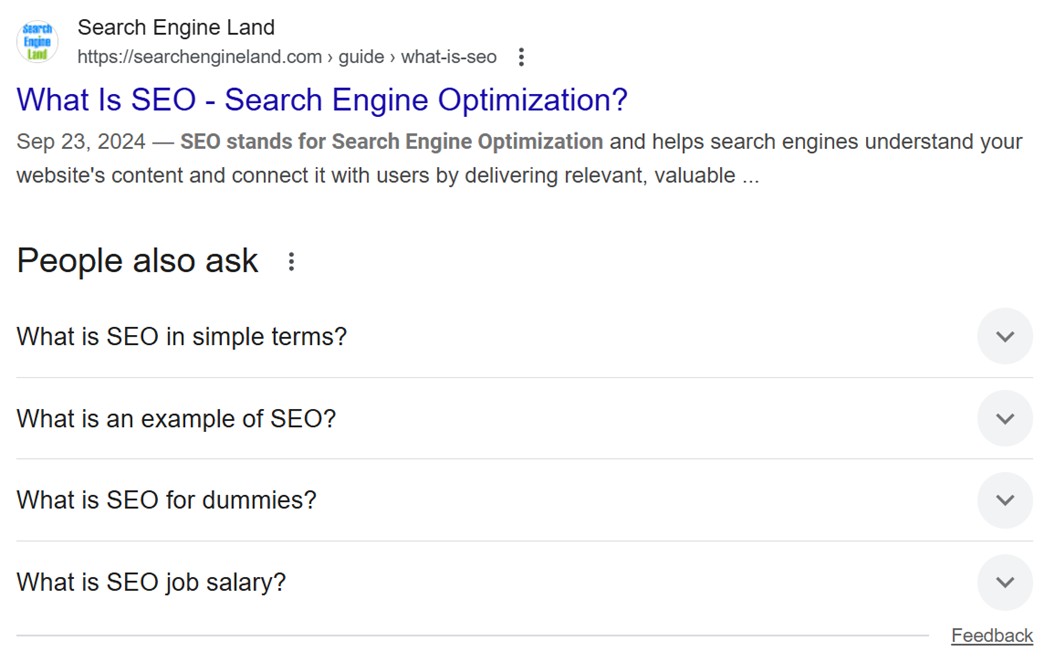
You’ll also see the same title appear at the top of your browser window. Both the title and description help Google understand what the page is about, and they also help people decide whether to click.

Each page of your website should have a unique title that clearly describes the content of that page. This helps your site show up for more specific search terms and gives you multiple opportunities to appear in free search results.
Choosing the Right Title
A common beginner mistake is naming the homepage after the business name only. For John’s site, that would be a missed opportunity. He wants to attract new customers searching for local repair services, not people who already know him. His business name includes “auto repair,” which helps, but without a location, he would compete globally for that term.
A better title would be: Auto Repair Penfield NY | John’s Auto Repair
Notice how the main keywords come first, followed by the business name. This format works well because search engines give more importance to words that appear early in the title. You should avoid repeating keywords too many times. Using the same keyword more than three times can make search engines think you are spamming, which can hurt your ranking.
How SEO and LLMs Work Together in 2025
Search engines now use Large Language Models (LLMs) such as Google Gemini, Microsoft Copilot, and ChatGPT to understand and summarize web content. These AI systems do more than list websites; they analyze meaning and intent.
When people ask AI-powered tools questions like “best brake repair near me” or “why does my car shake when braking,” the LLM searches its data for clear, helpful answers. Websites with well-written, trustworthy content are more likely to be used as sources or linked in AI answers.
How to Optimize for LLM Search
- Write clear, conversational answers to common questions.
- Use natural language instead of keyword stuffing.
- Include your business location naturally within your text.
- Provide detailed information that shows experience and expertise.
- Make sure each page has a clear purpose and original content.
LLMs reward useful, honest, people-first content. If your website content sounds like something an expert would explain to a customer face-to-face, it is likely to perform well in both search and AI results.
Conclusion
We learned how to find basic keywords, organize them for clarity, and write strong page titles that help both search engines and readers. Always focus on how people search and how they phrase their questions. This approach will prepare your site for both traditional SEO and the new AI-driven search world.
In Part 2, we will look at free online tools that show what keywords people actually search for and how to decide which ones to use.